Introduction
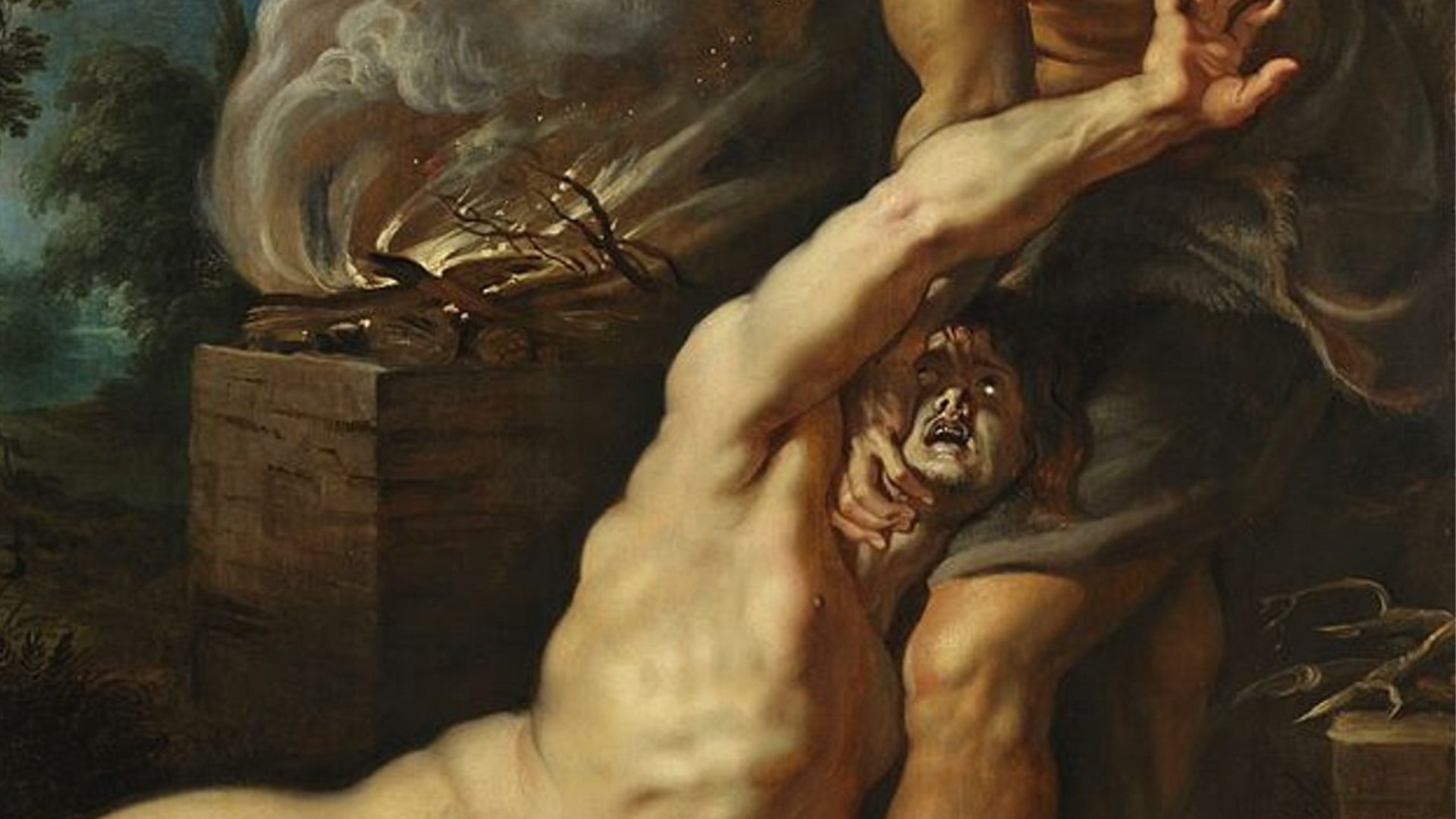
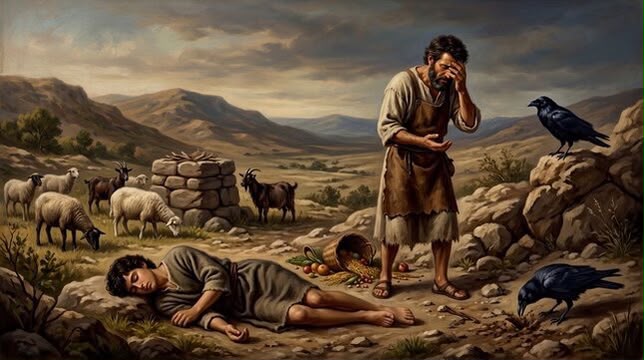
Surah 5 recounts the famous scene from the Book of Genesis where Cain, filled with rage, kills his brother Abel (see Genesis 4:3-4). We have shown in previous articles that the version given by the Quran is largely inspired by later Syriac and rabbinic narratives.1 In particular, the famous Quranic proverb that 'whoever kills a person [...], it is as if he has killed all of mankind' (5:32) turns out to be a near word-for-word quote from a passage in the Talmud. We will now see that there is another detail originating from a rabbinic source: the mention of the crow. The Quran explains that a crow showed Cain how to dispose of his brother's corpse: 'Allah caused a crow to appear and scratch the ground so that he could see how to bury his brother’s body' (5:31).
Cain and the Crow
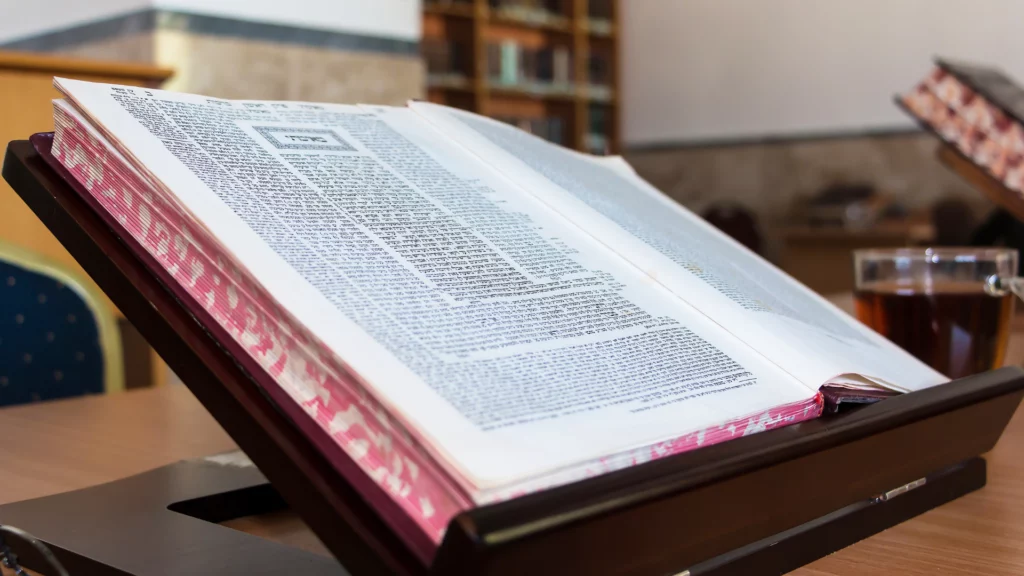
In his classic study published in 1833 on the 'borrows' of the Quran from Judaism, Abraham Geiger already pointed out that a similar story can be found in the Pirkei de Rabbi Eliezer:
They [= Adam’s family] did not know what to do with Abel because they were not accustomed to burial. A crow, whose companion had died, came by: it took him, dug into the earth and buried him before their eyes. Adam said: “I will do like this crow.” Immediately, he took Abel's body, dug into the earth, and buried him2 .
Since the publication of Geiger's work, the dating of the Pirké has been reevaluated by specialists, who place its final composition in the 8thcentury or even later. Therefore, it can no longer be seen a priori as the source of the Quran. However, it seems beyond doubt that the definitive version of the text was established after Islam, it is also true that its author reused older materials. Nicolai Sinai has convincingly shown that the story of Pharaoh's submission in the Quran (10:90-92), which has a parallel in the3 Pirké , probably comes from an older, now vanished, common source.But in the case before us, there is no need to resort to such a hypothesis, because there indeed exists an earlier source than the Quran that already mentions the story of the crow.4 But in our case, there is no need to resort to such an assumption, because there is indeed an earlier source than the Quran that already mentions the story of the raven.
In The origins of Muslim legends (1933), David Sidersky, often very well informed, draws attention to another piece of rabbinic literature, the Midrash Tanhuma, where we read:
When Cain killed Abel, the latter was lying on the ground, and Cain did not know what to do. God caused two fighting birds to pass by; one killed the other, then dug a hole in the ground with its feet and buried the dead. Based on this example, Cain dug into the earth and buried Abel (Beresit, 10)5 .
The dating of Midrash Tanhuma has been a subject of debate among historians, but the most recent developments agree on a pre-Islamic origin. Marc Bregman points out that Yannaï, a Palestinian Jewish poet from the early 7th century, was already familiar with the Midrash Tanhuma, which means that the text already existed by « the end of the Byzantine period in Palestine, before the Muslim conquests of the 7th century »6 . From there, the legend was transmitted to other rabbinic texts as well as to the Quran7 .
Another historian, Christfried Böttrich, examined the motif of the bird showing Cain how to bury his brother’s body and its various ramifications in ancient texts. He concludes that « the oldest document of the aggadic tradition on the burial of Abel can be found in the Midrash Tanhuma, a homiletic midrash of the Pentateuch whose material content dates back to around [the year] 400. Most of its poems trace traditions back to R. Tanchuma bar Abba, who lived in the second half of the IVth century» 8 .
Comparison table
Quran | Midrash Tanhuma |
« Allah caused a crow to appear which scratched the earth to show him how to bury his brother’s body » (5:31). | « God caused two birds to pass by fighting; one killed the other, then dug a hole in the ground with its feet and buried the dead. Inspired by this example, Cain dug into the earth and buried Abel » (Genesis 10). |