Introduction
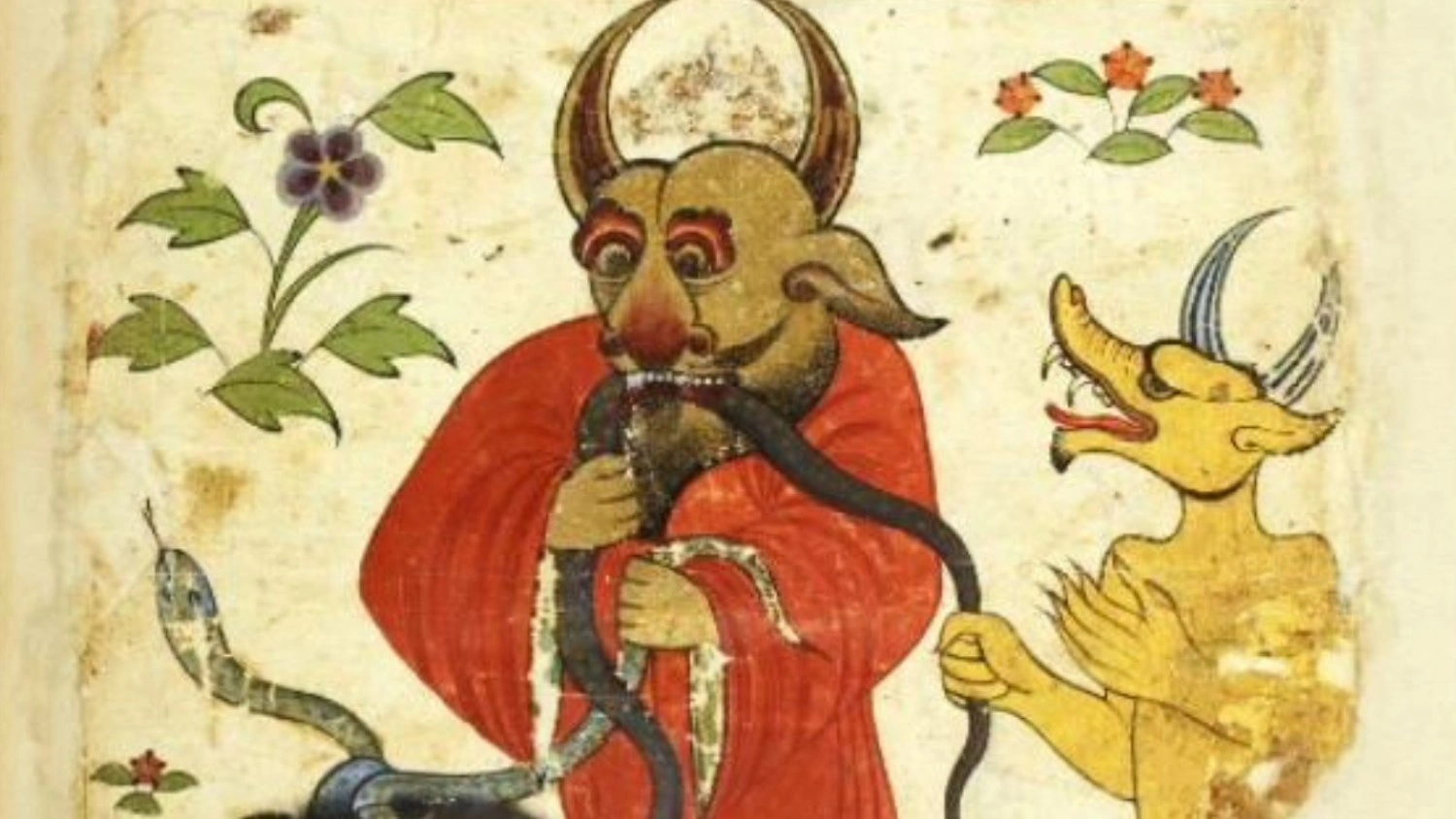
Dans l’islam, Iblîs, ou al-shaytan, est une figure incontournable. Ennemi d’Allâh et des hommes, il s’efforce d’égarer ces derniers afin qu’ils soient punis à leur tour. S’il en veut amèrement à l’humanité tout entière, rares sont les civilisations à connaitre son existence. En effet, le diable, notre diable, celui qu’on appelle également Satan, est absent de la plupart des systèmes de croyance. Bien sûr, de nombreuses cultures connaissent des êtres maléfiques, des mauvais esprits et autres divinités du chaos. Mais il n’existe pas véritablement d’équivalent au diable tel que les traditions juives, chrétiennes et musulmanes le définissent. En fait, même la Bible, en tout cas l’Ancien Testament, ne parle pas du diable. Comme toute chose, le diable a une histoire. Dans son livre intitulé The Old Enemy: Satan and the Combat Myth, Neil Forsyth a montré que cette histoire, longue de plusieurs millénaires, remonte à d’anciens mythes proche-orientaux où chaque fois le même schéma se répète : l’affrontement entre le « Bien » et le « Mal », incarnés par une (ou plusieurs) entité(s) surnaturelle(s). Dans cet article, nous retracerons l’histoire du diable, depuis ses origines mythologiques jusqu’à sa représentation coranique. Celle-ci, nous le verrons, est particulièrement dépendante des écrits rabbiniques et – surtout – syriaques de la fin de l’Antiquité.Le diable est enchaîné
Le diable dans l’Orient ancien
Dans l’Égypte ancienne, on pense notamment au combat du dieu Seth avec son frère Horus. Face à Horus, le dieu du ciel à tête de faucon, Seth, représenté comme un serpent, un cochon, parfois de couleur rouge. Meurtrier de son père Osiris, castré par Horus auquel il arrache l’œil, il suggère une divinité foncièrement mauvaise. Son opposition avec Horus serait en fait l’expression de luttes dynastiques entre les rois de Haute-Égypte (Horus) et de Basse-Égypte (Seth). Certains de ses traits physiques, comme sa couleur rouge et son aspect bestial influenceront la représentation classique du diable, qui hérite également des cornes et de la queue d’Anubis. La religion égyptienne connait en outre des démons secondaires qui sont tenus pour responsables de la maladie et des malheurs. Leurs noms évoquent la répugnance qu’ils inspirent : celui-au-visage-repoussant, celui-qui-vit-de-vers ou encore celui-qui-mange-ses-déjections. Ces démons se déplacent par groupes de sept ou de multiples de sept, et répandent sur leur passage les fièvres saisonnières. La croyance se rapproche d’une ancienne théorie, en vogue chez les médecins de l’Antiquité et du Moyen Âge, selon laquelle les épidémies étaient provoquées par les « miasmes », ces espèces de brouillards toxiques qui apportaient les maladies en se déplaçant, à l’image de nos démons égyptiens. Ces derniers affectionnent tout particulièrement le désert, l’obscurité, les lieux lointains et les eaux, préfigurant le diable de la tradition abrahamique.
La Mésopotamie nous offre un autre exemple de combat mythique entre le Bien et le Mal à travers l’épopée de Gilgamesh, qui constitue le plus ancien roman épique connu à ce jour. Le héros Gilgamesh, accompagné de son ami Enkiddu, se rend au bois de cèdres2gardé par le monstre-dragon Huwawa, « l’adversaire ». Vient-il simplement couper du bois ou, comme le disent des versions plus tardives, délivrer son peuple du mal, symbolisé par Huwawa ? Quoi qu’il en soit, il réussit à le tuer, rapporte sa tête au roi des dieux, Enlil, qui est furieux et déclenche alors une vague de terreur sur le pays. Avec le temps, l’histoire va subir un certain nombre d’évolutions. La forêt, qui symbolisait au départ la Syrie ou le Liban, le pays des cèdres (du grec lebanon, cèdre), devient le monde sombre et tragique préfigurant l’enfer. Certains épisodes viennent se greffer à l’histoire d’origine : il y est question notamment d’un arbre sacré gardé par un serpent, qui rappelle le récit d’Adam et Eve.
Dans la mythologie babylonienne, on retrouve le thème du combat de façon récurrente. Des textes composés vers –1800 évoquent la lutte de Ninurta contre le démon des eaux, Azag. La défaite de ce dernier permet d’organiser le système d’irrigation et de donner naissance à la civilisation. Dans un autre mythe, dont la rédaction se situe vers –1100, le dieu Marduk combat un monstre marin femelle, Tiamat, dont il découpe le corps en deux, formant ainsi le ciel et la terre. Ce mythe est un témoin important de la croyance, répandue dans le Proche-Orient ancien, selon laquelle le ciel constitue une vaste étendue d’eau. Un autre mythe relate le combat de Ninurta contre l’oiseau Anzu, un messager du dieu Enlil. Un texte retrouvé dans la bibliothèque d’Assourbanipal à Ninive (aujourd’hui en Irak) lui prête les paroles suivantes : « Il conçut dans son cœur l’envie de renverser le pouvoir d’Enlil : “Je prendrai la tablette des destinées, je dirigerai les décrets divins, j’affermirai mon trône et je serai le maître des normes.” » Ainsi l’oiseau Anzu, qui se révolte contre l’autorité suprême, constitue le prototype de l’ange rebelle, bien connu de la tradition judéo-chrétienne et musulmane. On mentionnera enfin un mythe dans lequel les hommes, nés du sang du démon Kingu, sont intrinsèquement mauvais, et où le mal se transmet de génération en génération. Les maux de l’existence sont infligés par des démons à l’allure effrayante, à l’image de l’Assyrien Pazuzu, devenu mondialement célèbre grâce au film L’exorciste (1973).
Le monde gréco-latin ne connait pas de diable. Comme l’explique Claude Gilliot, « la multitude des dieux limite la puissance de chacun et engendre des rivalités entre eux. Cela suffit à expliquer l’existence du mal qui est provoquée par ces êtres ambivalents, tantôt bienfaiteurs, tantôt destructeurs, au gré de leurs intérêts »3. À la rigueur, la figure qui se rapprocherait le plus du diable serait Pan, le dieu cornu à face de bouc. Bien sûr, on retrouve là aussi le thème de la lutte entre le Bien et le Mal. On pense notamment au combat mené par Zeus et son fils Dionysos, forces de vie, contre les Titans de Kronos, dévoreurs de ses enfants. Socrate mentionne bien des « démons », mais ils ont peu de chose à voir avec les êtres maléfiques de la tradition judéo-chrétienne. Ils se rapprochent davantage des « génies » ou des « esprits », sans connotation négative. Xénocrate et Aristote parlent également des daimôns, qui peuvent être bons ou mauvais, et donc comparables à ce titre aux djinns, bien que les philosophes grecs les conçoivent davantage comme des âmes intermédiaires entre les dieux et les hommes.
Il convient enfin de mentionner le diable mazdéen, Ahriman, souvent considéré comme le prototype de Satan. D’après les Gâthas, ensemble de textes censé contenir ses enseignements, Zoroastre affirme l’existence d’un dieu suprême, Ahura Mazda, et de deux esprits jumeaux, le bon, spenta manyu, et le mauvais, ahra manyu, ou Ahriman, en lutte perpétuelle. Ce dernier, représenté comme un serpent, possède une armée de démons à son service : Azazel, démon des lieux déserts, qui sera incarné dans le Bouc émissaire, Léviathan et Rahab, démons du chaos, et Lilith.
La figure du diable dans la Bible
Les spécialistes de l’Ancien Testament ont depuis longtemps souligné la place « extraordinairement limitée » qu’y occupe le diable4. Cela peut sembler surprenant vu l’importance de la figure du diable dans le judaïsme et surtout le christianisme. Pourtant, force est de constater qu’on ne trouve aucune trace dans ces écrits de l’ange rebelle contre Dieu. Certes, il est question à plusieurs reprises d’un satan, de la racine hébraïque stn, signifiant « l’adversaire », « celui qui met obstacle », ou encore « l’accusateur ». La traduction grecque de la Bible, la Septante, rendra le mot satan par diabolos, du verbe diaballein, « mettre obstacle ». Mais dans l’Ancien Testament, satan n’est pas encore le diable à proprement parler. Dans un contexte militaire, comme en 1 Samuel 29 : 4, il désigne un ennemi humain. Ailleurs, il désigne un ange faisant partie de la cour de Dieu. Serviteur fidèle de Yahveh, sa fonction est d’accuser les hommes auprès du tribunal céleste. Autrement dit, satan est un « procureur », au sens littéral et juridique du terme. Dans la vision de Zacharie, il joue le rôle du procureur dans le procès du grand prêtre Josué : « Le satan se tenait à sa droite pour l’accuser » (Zacharie 3 : 1). Satan « parcourt la terre » pour observer le comportement des hommes et rendre compte à Dieu de leurs manquements à la Loi divine. Progressivement, satan devient toutefois une figure de plus en plus autonome, qui ne se contente plus d’observer les hommes pour les accuser ensuite, mais devient un « tentateur ».
Pour autant, le satan de l’Ancien Testament n’est pas ennemi de Dieu. Il apparait tout au plus comme l’ennemi de l’homme, ou du moins comme son mauvais conseiller. À ce titre, il n’est sans doute pas inutile de rappeler que le serpent qui tente Adam et Eve au jardin d’Éden n’est pas le diable : « le récit de la Genèse ne confère au serpent aucun statut surnaturel. Il utilise plutôt un artifice relevant de la fable ou du conte qui fait parler un animal pour dramatiser l’expérience humaine de la tentation »5. L’identification du serpent avec le diable sera l’œuvre des sectes juives postérieures, reprise par le christianisme et l’islam. Mais dans le texte biblique, le serpent n’est rien de plus qu’un animal, certes particulièrement rusé. On a déjà vu que dans de nombreux mythes proche-orientaux, le serpent représentait les forces démoniaques, ce qui a pu faciliter le rapprochement avec le diable. Pour les auteurs anciens, le choix du serpent pour personnifier le Mal allait sans doute de soi au vu de la terreur qu’inspire cet animal. Il semble en tout cas que chez les primates, la peur des serpents ait une origine évolutionnaire et serait donc, au moins en partie innée6.
Si le diable est absent ou presque de l’Ancien Testament, il est en revanche une figure importante des textes qui composent le Nouveau Testament. Dans les Évangiles, le diable est présent à chaque page : dans les tentations, dans les possédés, dans les discours ; c’est le diable qui pousse Judas à trahir le Christ. Satan est qualifié de « prince de ce monde », « prince des ténèbres », régnant ici-bas et guidant les hommes vers la perdition. Dans l’Apocalypse, Jean le décrit comme un grand dragon couleur de feu, doté de sept têtes et dix cornes et d’une queue énorme. En passant de l’Ancien au Nouveau Testament, on s’aperçoit de la mutation de Satan en l’espace de quelques siècles, qui passe de l’ange accusateur au service de Yahweh à la figure terrifiante rebelle contre Dieu.
Cette transformation n’est pas arrivée là par hasard. C’est qu’entre temps, plusieurs courants juifs sectaires sont passés par-là, qui ont façonné à leur manière la figure du diable. Ces divers courants, proches de la secte de Qumran, ont laissé derrière eux de nombreux écrits, dont l’un en particulier aura une grande importance dans l’Antiquité. Il s’agit du Livre d’Hénoch, du nom d’un patriarche mythique présenté comme l’arrière-grand-père de Noé. Le Livre d’Hénoch désigne en réalité un ensemble de textes (cinq au total) rédigés entre le 3e et le 1er siècle avant notre ère. Influencés par les mythes babyloniens, ces textes expliquent l’existence du mal par une révolte des anges conduits par leurs chefs Azazel et Semihazaz. Attirés par la beauté des femmes de ce monde, les anges rebelles s’unissent à elles, créant une race bâtarde d’êtres maléfiques, les Géants. En outre, ils apprennent à l’humanité la magie et la confection des armes. Les anges rebelles sont punis : selon certaines versions, ils deviennent des étoiles qui tombent du ciel, ce qui donnera en latin l’expression Lucifer, « porteur de lumière ». Un autre ouvrage important, qui s’inscrit dans la lignée du Livre d’Hénoch, est le Livre des Jubilés, composé au 2e siècle avant notre ère dans une secte juive. Ici, c’est l’ange Mastema (de la racine stm, « haïr ») qui est à l’origine de la révolte. Opérant une relecture de la Bible, l’auteur des Jubilés attribue à Mastema tous les mauvais côtés de Yahveh. Nous reparlerons bientôt du Livre des Jubilés, dont certaines idées sur le diable sont reprises dans le Coran. Une autre secte juive, les Esséniens, « fils de lumière », a beaucoup contribué à l’édification de la figure du diable. Influencés par les concepts dualistes iraniens, les Esséniens affirment que Dieu a créé deux esprits, le prince de la lumière et le prince des ténèbres, Belial, également appelé Sammaël. Quel que soit le nom qu’ils leur attribuent, ces écrits ont largement contribué à l’idée traditionnelle du diable et à l’image que l’on s’en fait : ange déchu, devenu à la fois ennemi de Dieu et de l’homme, cherchant à pousser ce dernier contre le Créateur et à répandre le mal. Comme le note Georges Minois, « une telle créature est le fruit typique de la mentalité sectaire apocalyptique si répandue en ces temps troublés des deux premiers siècles avant notre ère »7.
Le diable dans le Coran
Nous l’avons vu, avant l’islam, le diable a déjà une longue histoire et subi une forte évolution. Le Coran va hériter à son tour de ces diverses représentations et d’autres encore qui viendront s’ajouter à la fin de l’Antiquité. Prenant leurs distances avec le thème des anges rebelles, certains exégètes juifs et chrétiens expliqueront que Satan était au départ un ange du Seigneur, qui refusa, par orgueil, de se prosterner devant Adam lorsque Dieu le lui demanda. C’est précisément cette version de l’histoire du diable que les rédacteurs du Coran reprendront à leur compte. Nous y reviendrons.Iblîs et al-shaytân
Dans le Coran, le diable est connu sous deux noms différents : Iblîs et al-shaytân. Le premier apparait comme un nom propre, celui de l’ange rebelle qui refusa de se prosterner devant Adam. Selon le consensus général, le nom d’Iblîs vient du grec diabolos, probablement via le syriaque dîblûs ou diyâbûlûs8. Quant au nom al-shaytân (Satan), il provient vraisemblablement de l’éthiopien saytân, utilisé dans la Bible éthiopienne9. En outre, le Coran désigne à plusieurs reprises le diable par l’appellation al-shaytân al-rajîm. Cependant, le sens du qualificatif al-rajîm n’est pas très clair, ce qui a conduit les commentateurs musulmans à avancer de nombreuses hypothèses. Selon l’interprétation la plus courante, l’expression voudrait dire « Satan le lapidé ». En effet, la racine arabe r.j.m. signifie littéralement « lapider ». On notera que l’idée de lapidation du diable apparait déjà dans une homélie du théologien syriaque Éphrem de Nisibe (m. 373) qui écrit : « Tous les hommes courront pour te lapider, en n'oubliant pas que c'est par toi que le peuple enragé a couru pour lapider son Créateur » (Hymne 59 : 15-16). Par ailleurs, le Coran rapporte un curieux récit dans lequel les démons qui tentent de s’approcher de l’Assemblée céleste sont pourchassés par des météorites (15 : 16-18 ; 37 : 6-10). Dans une précédente publication, nous avons montré que le Coran s’inspire en cela d’un mythe d’origine zoroastrienne10. En tout cas, cette compréhension de l’expression al-shaytân al-rajîm est probablement ce qui a donné naissance au rituel de la lapidation de Satan à La Mecque11, au cours duquel les pèlerins jettent de petits cailloux sur des colonnes censées représenter le diable.
Selon une autre hypothèse, avancée notamment par le commentateur al-Tabari (m. 923), l’expression signifie « Satan le maudit », en référence à son bannissement du paradis. Dans ce cas, au lieu de la racine arabe r.j.m., l’expression est lue à la lumière de l’éthiopien ragama, « maudire, insulter », ou de son équivalent mandéen sâtânâ rgîmâ12. Plus récemment, Adam Silverstein a suggéré une autre explication, qui rapproche directement la figure du diable dans le Coran de ses représentations au Proche-Orient. Comme nous l’avons vu, dans la Bible, le diable a d’abord été perçu comme un « procureur » ou un « accusateur ». Or, d’après Silverstein, l’arabe al-rajîm relève également du champ juridique car apparenté à l’akkadien ragâmu dont le sens le plus commun est celui de « déposer une plainte, intenter une action en justice, réclamer quelque chose par voie de justice ». Ainsi, l’expression coranique pourrait avoir signifié à l’origine « Satan l’accusateur », mais ce sens n’aurait pas été compris par les commentateurs musulmans, qui s’efforcèrent de lui trouver un substitut, sans d’ailleurs parvenir à un consensus. Quoi qu’il en soit de toutes ces hypothèses, il reste curieux que le Coran appelle le diable à la fois Iblîs et al-shaytân. On remarque que le nom d’Iblîs désigne exclusivement l’ange rebelle qui refuse de se prosterner devant Adam. C’est seulement après son bannissement du paradis qu’il se fait appeler al-shaytân et endosse le rôle d’ennemi des hommes13. Or, l’idée que le diable a changé de nom après son expulsion a été avancée par plusieurs théologiens syriaques de l’Antiquité, selon qui « le diable a choisi ce nom après avoir désobéi à l’ordre de Dieu de vénérer Adam ». Dans la Caverne des Trésors, nous lisons ainsi qu’après avoir désobéi, « il fut appelé du nom de Satana, parce qu’il s’était détourné »14.
Ange ou démon ?
Une autre question qui a beaucoup fait s’interroger les exégètes concerne la nature d’Iblîs : s’agit-il d’un ange ou d’un djinn ? La position du Coran est particulièrement ambiguë. Comme l’a noté Daniel De Smet, « les données disparates, obscures et contradictoires de la démonologie coranique causèrent beaucoup de soucis aux exégètes qui ont essayé tant bien que mal de les concilier et de les systématiser »15. Certains passages suggèrent en effet très fortement qu’il est un ange : « Et lorsque Nous demandâmes aux Anges de se prosterner devant Adam, ils se prosternèrent à l'exception d'Iblîs qui refusa » (2 : 34). Mais dans une autre version, Iblîs est présenté explicitement comme un djinn : « Et lorsque nous dîmes aux anges : ‘‘Prosternez-vous devant Adam’’, ils se prosternèrent, excepté Iblîs qui était du nombre des djinns » (18 : 50). Notons que le dernier segment du verset, « excepté Iblîs qui était du nombre des djinns », pourrait être un ajout postérieur visant à clarifier la situation16. Quoi qu’il en soit, la nature d’Iblîs demeure ambivalente, apparaissant tantôt comme un ange, et tantôt comme un djinn. Cette ambivalence pourrait trahir une influence de la littérature énochienne17. Comme nous l’avons vu, en effet, la frontière entre les anges et les démons est très mince dans le Livre d’Hénoch comme dans le Livre des Jubilés. On a plutôt affaire ici à des anges déchus, ce qui correspond assez bien à la position d’Iblîs dans le Coran. Reste la question des djinns, que certains historiens rapprochent également des anges déchus de la littérature énochienne18. Mais de cela, nous discuterons dans une future publication.La chute d’iblîs
Dans le Coran, la nature de la rébellion d’Iblîs est clairement explicitée. On peut résumer les choses ainsi : Allah crée Adam et ordonne aux anges de se prosterner devant lui. Tous les anges obéissent à l’exception d’Iblîs, qui refuse en rétorquant qu’il est un être de feu et qu’il n’a pas à se prosterner devant Adam, qui est fait d’argile. En conséquence, Allah punit Iblîs et l’expulse du paradis. Le récit de la prosternation des anges est répété à sept reprises dans le Coran (2 : 30-39 ; 7 : 11-24 ; 15 : 26-43 ; 17 : 61-65 ; 18 : 50-51 ; 20 : 115-124 ; 38 : 71-85). Ces différentes versions présentent des « tensions narratives », pour ne pas dire des contradictions, qui ont été bien analysées par un historien allemand, Karl-Friedrich Pohlmann, qui a pu démontrer qu’elles étaient le produit d’une pluralité de rédacteurs intervenant de manière successive sur le texte coranique19. Quoi qu’il en soit, le récit de la prosternation des anges n’est pas d’origine biblique ; c’est le fruit des spéculations des théologiens juifs et chrétiens postérieurs. Il apparait tout d’abord dans la littérature rabbinique, où la prosternation des anges devant Adam est directement connectée à l’idée que l’homme est créé à l’image de Dieu (Genèse 1 : 27). Sergey Minov signale toutefois que certaines versions du récit s’opposent explicitement à la vénération d’Adam par les anges, qui soulève en effet quelques problèmes théologiques. Dans une variante, les anges, découvrant Adam pour la première fois, s’agenouillent devant lui en croyant voir Dieu. L’ange Michael intervient alors pour les empêcher de commettre une irréparable erreur20. Le thème de la prosternation des anges est ensuite repris par certains courants chrétiens syriaques. On le trouve notamment dans la Caverne des Trésors (4e siècle), qui constitue probablement la source du Coran21. Pour les chrétiens, le récit présentait un intérêt majeur. En effet, dans les écrits chrétiens, Jésus est souvent présenté comme le « nouvel Adam » (par exemple Épître aux Romains, 5 : 17-19). Ainsi, en se prosternant devant Adam, les anges se prosternaient en réalité devant Jésus, anticipant Hébreux 1 : 6 où nous lisons : « Et lorsqu’il introduit de nouveau dans le monde le premier-né, il dit : Que tous les anges de Dieu l’adorent ! » Pour les chrétiens, la prosternation des anges devant Adam sert donc de preuve de la divinité de Jésus, ce qui rend sa reprise par le Coran d’autant plus étonnante.
On peut en effet se demander pourquoi Allah demanda aux anges de se prosterner devant un autre que Lui. Dans la version du Talmud, la réponse est évidente : les anges doivent se prosterner car Adam est créé à l’image de Dieu, même si, on l’a vu, cette position posait déjà problème pour les théologiens juifs. Par ailleurs, le thème de l’homme créé à l’image de Dieu semble absent du Coran. En revanche, elle figure bien dans les hadîths, où nous lisons : « Allah a créé Adam à Son image »22. La question de l’anthropomorphisme donnera lieu à d’importantes controverses chez les théologiens musulmans23. Selon certains, les versets du Coran et les hadîths mentionnant le visage, les mains, les jambes ou encore le petit doigt d’Allah devaient être compris dans un sens littéral : Allah possède un corps à la manière des hommes. Pour d’autres, il s’agissait là de simples allégories. Au 10e siècle, le calife al-Radi trancha le débat en faveur de la seconde opinion. S’en prenant aux théologiens hanbalites qu’il accusait d’anthropomorphisme, il écrira : « vous affirmez que votre visage hideux et dégoûtant est à l’image du Seigneur des mondes et que votre vile apparence est à Son image » 24.
Mais revenons plutôt à notre sujet. Pour les chrétiens, on l’a vu, la prosternation devant Adam anticipe l’adoration de Jésus par les anges. Évidemment, on ne trouve rien de tel dans le Coran, qui réfute explicitement la divinité du Christ. Mais le texte coranique ne fournit pas vraiment d’explication alternative à la prosternation des anges. Il existe cependant une possible exception : dans une des versions coraniques de la légende, il est dit que, contrairement aux anges, Adam connait « les noms de toutes choses » (2 : 31). Doté d’une connaissance supérieure, Adam est donc placé ici au-dessus des anges, ce qui semble justifier maladroitement que ces derniers se prosternent devant lui. De manière intéressante, le thème de la supériorité d’Adam n’est présent que dans la version de la sourate 2. Ce détail narratif, rajouté par les rédacteurs de la sourate 2, peut ainsi être perçu comme une correction / supplémentation des versions précédentes qui ne fournissaient pas d’explication à la prosternation des anges25.
Quoi qu’il en soit, la prosternation des anges devant Adam a provoqué l’embarras des commentateurs musulmans. Il s’agissait pour eux de justifier la prosternation des anges devant un homme tout en évitant l’accusation de polythéisme (shirk). La difficulté est d’autant plus forte qu’à une exception près – la prosternation des frères de Joseph dans la sourate 12 –, « le prosternement face contre terre est toujours, dans le Coran, un prosternement devant Dieu »26. Pour contourner la difficulté, la plupart des théologiens expliqueront que la prosternation des anges n’était rien d’autre qu’une salutation. L’explication n’est toutefois guère convaincante, car pourquoi alors Iblîs aurait-il refusé de saluer Adam ? Le fait qu’Iblîs justifie son refus en arguant de sa supériorité suffit à démontrer que la prosternation impliquait à tout le moins un rapport de soumission et de hiérarchisation. En outre, il est intéressant de noter qu’après son appropriation par l’islam, le thème de la prosternation des anges devant Adam fut rejeté par les chrétiens syriaques, et devint même un sujet de polémique avec les musulmans. Dans sa Réponse aux Arabes, l’évêque Dionysius bar Salibi (m. 1171) commente ainsi : « Dès que Dieu ordonna aux anges de se prosterner devant lui [= Adam], Satan refusa, et il eut raison. Comment un être de feu pourrait-il se prosterner devant un mortel ? »27. Le mystique musulman Mansur al-Hallaj (m. 922) prit lui aussi le parti d’Iblîs, en soulignant qu’il avait eu raison de refuser de se prosterner et qu’il fut le seul à rester fidèle à sa foi monothéiste28.
Satan versus l’homme
Après son expulsion, Iblîs, désormais appelé al-shaytan, devient l’ennemi juré de l’homme et cherche constamment à l’inciter au péché. Mais une lecture du texte montre que c’est en fait Allah qui donne la permission à Satan d’agir ainsi. Dans un passage, le diable déclare en effet ceci : « Par Ta puissance ! Je les séduirai assurément tous » (38 : 82). Dans un autre passage, Allah demande explicitement au diable de séduire les hommes : « Excite, par ta voix, ceux d'entre eux que tu pourras, rassemble contre eux ta cavalerie et ton infanterie, associe-toi à eux dans leurs biens et leurs enfants et fais-leur des promesses » (17 : 64). Autrement dit, dans le Coran, c’est Allah qui accorde à Satan le pouvoir de pousser les hommes à commettre des péchés. Ce pouvoir n’est toutefois pas sans limite puisqu’il épargne les serviteurs d’Allah (38 : 83). Pourtant, c’est bien le diable qui incita Adam et Eve à goûter de l’arbre interdit (7 : 20-22), ce qui semble contredire en effet l’idée que Satan est impuissant face aux serviteurs d’Allah. Quoi qu’il en soit, l’idée que le diable a reçu sa mission de la part de Dieu s’inspire de la littérature énochienne, en particulier du Livre des Jubilés dont nous avons déjà parlé. Dans ce texte, l’ange Mastema demande à Dieu de donner la possibilité aux anges maléfiques de séduire les fils des hommes, chose que Dieu acceptera (Jubilés 10 : 1-14). Or, dans le Coran, on voit pareillement Iblîs négocier avec Allah la permission de séduire les hommes (7 : 14-16). Mastema et Iblîs sont donc l’un et l’autre investis d’un mandat divin pour séduire l’humanité. Dans les deux cas également, la permission accordée souffre d’une exception : Iblîs ne peut séduire les serviteurs d’Allah, tout comme Mastema ne peut pourchasser le peuple élu d’Israël (Jubilés 15 : 32). La figure d’Iblîs dans le Coran semble donc bien calquée, au moins en partie, sur celle des anges déchus que l’on trouve dans la littérature énochienne29.
La figure du diable en islam est omniprésente dans la vie des hommes, de leur premier jour sur terre jusqu’à leur dernier souffle. Ainsi lit-on dans les hadîths que le pleur des nouveau-nés est dû au fait que Satan leur inflige une piqure aux doigts30. Si le croyant ne se lève pas la nuit pour faire sa prière, le diable en profite pour uriner dans ses oreilles31. Dans un hadîth, le Prophète conseille à celui qui se réveille pendant son sommeil de se laver trois fois le nez, car le diable rentre dans les narines32. Selon un autre hadîth célèbre, le bâillement vient de Satan, et le diable se moque des gens qui bâillent33. Notons que l’on trouve quelques échos de cette croyance dans des cultures voisines. On pense notamment au proverbe juif : « N’ouvre pas ta bouche à Satan ».
Chez les Indiens, les esprits (bhuts) entrent dans le corps par la bouche, et bailler augmente mécaniquement le risque qu’ils pénètrent à l’intérieur34. Toujours selon les hadîths, pendant l’appel à la prière, Satan émet des pets bruyants pour détourner l’attention des croyants35. Bien des siècles plus tard, une légende dira que, dans le château de Wartburg, en Allemagne, le théologien Martin Luther, fondateur du protestantisme, se battit un jour contre le diable, lorsque ce dernier émit un pet qui laissa « une trainée d’odeur nauséabonde dans la chambre pendant plusieurs jours »36. Le diable est une figure complexe, produit par des siècles de la pensée humaine et sans cesse évoluant. Personnage réel ou subterfuge créé par l’homme pour désigner le Mal, comme il plaira, Satan est en tout cas un sacré farceur !