Introduction
In the Quran, Allâh is by far the most common term used to refer to God, with over 2,500 occurrences. However, the origins of this divine name (theonym) are not fully elucidated. In Arabic, the generic term for "the god" is al-‘ilâh, which derives from the Proto-Semitic ‘il.1 It is a common noun used to denote a supernatural being, a "god." As we will see, al-‘ilâh was also before Islam the name of a specific deity for both polytheists and Christians. The name "Allâh" has, of course, sparked much debate. According to Arabic grammarians, followed by the majority of historians, Allâh is nothing but a contraction of al-‘ilâh, which would be its original form. This hypothesis is particularly appealing considering that the name of the goddess Allât is itself a contraction of al-‘Ilât and would therefore have undergone the same evolution2. However, Christian Robin emphasizes that such contraction is "very rare in classical Arabic"3. Another possibility proposed by historians is that the Arabic Allâh derives from Syriac ‘Allâha4, but this theory has been challenged by David Kiltz, who shows that Arabic developed independently from Syriac5.
In any case, a deity named al-‘ilâh or Allâh (the two names are sometimes interchangeable) is attested in literary sources and in Arabic inscriptions before Islam. This article aims to provide an overview of the use of the name Allâh in the religious traditions that composed pre-Islamic Arabia.
From Paganism to Islam
Allâh has a long history before Islam. Its name is first attested in the 1st century BCE and appears in numerous inscriptions discovered in Arabia. It should be noted that in its archaic form, Arabic writing lacked vowels. Consequently, pre-Islamic inscriptions only reveal the consonantal skeletons of the names “Allâh” and “al-‘ilâh,” simply ‘lh or lh. However, there is no doubt that these inscriptions refer to a deity whose name was (and was pronounced) “Allâh”6. Indeed, some inscriptions were transcribed both in Arabic and Greek. Greek writing, unlike archaic Arabic, records vowels, which helps decipher how the Arabic text was pronounced. For example, an inscription mentions a certain whblh, which is transcribed in Greek as onabalas, and in vocalized Arabic, it becomes wahballâh, "gift of God"7.
Having clarified this technical point, let's return to the first mention of the name Allâh we referred to. It is found in an inscription discovered at Qaryat al-Fâw, in southern Saudi Arabia. It is a funerary stele that entrusts the protection of a tomb to three deities, one of whom is called al-Lâh. The text is also one of the earliest witnesses of the Arabic language, and given its importance, we reproduce it in full below:
‘Ijl son of Hôfi’amm built this tomb for his brother Rabib ‘il son of Hôfi’amm, and also for himself, his children, his wife, her children, their grandchildren, and their wives, noble of the Ghalwân lineage. Furthermore, he entrusted it to Kahl, to al-Lâh, to 'Aththar al-Shâriq against all powerful and weak, buyer and pledgee, forever, against any harm, as long as the sky delivers rain and the earth is covered with grass8.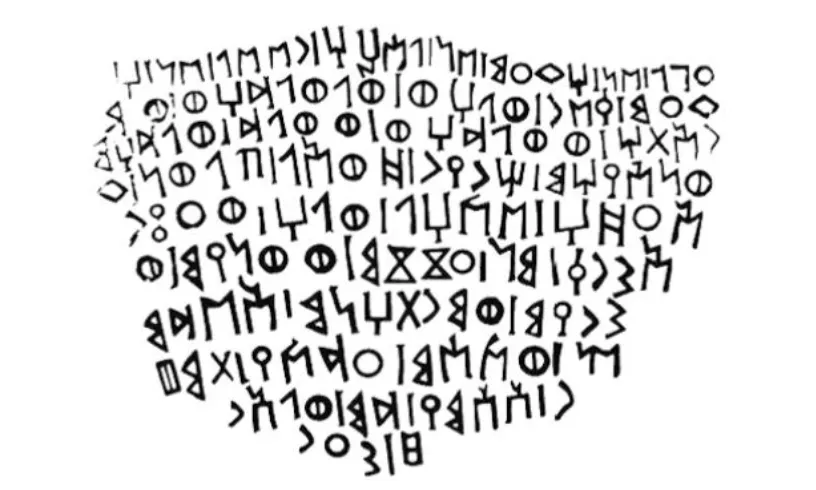
The origin of this inscription is undoubtedly pagan, as shown by the mention, alongside Allâh, of the gods Kahl and ‘Aththar al-Shâriq. Indeed, Allâh was the name of a polytheistic Arab deity before Islam. This is certainly not surprising, given that Islamic tradition itself professes that the Meccans, before Islam, worshipped several deities including one called Allâh. However, it should be remembered that Islamic tradition is more of a mythical reconstruction of the past than a faithful reflection of historical reality9. As such, we have no reliable data concerning the religious practices of the Meccans before Muhammad’s arrival. Nonetheless, a deity known as Allâh or its variants is well attested in pre-Islamic Arabic inscriptions. For example, two inscriptions found at al-Qurà, north of Hejaz, mention a god called hal-Lâh, then al-Lâh. The first inscription, discovered in the early 20th century by two French archaeologists, reads:
‘Abdmanât Asdaq May Allâh be pleased with him and grant him aid10.The second inscription, kept at the National Museum of Riyadh, commemorates the founding of a structure dedicated to the god al-Lâh:
Nfyh son of ‘Amm, priest of hal-Lâh, built this structure for al-Lâh, the god of h-Rm’t. May He be pleased with him and grant him aid […]11Allâh is also regularly invoked in Safaitic inscriptions, an ancient form of Arabic script practiced by pre-Islamic Bedouins. It is usually invoked in response to a particular request:
"O Allâh, [grant] rest against all that comes"
"O Allâh, [grant] the bounty"
"O Allâh, [grant] security"
"He was away from his family, so may Allâh have mercy" 12, etc.
Allâh is also invoked to make it rain. For example, in this inscription, a farmer laments the lack of water and implores: “bring down the rain, O Allâh!”13. The description of Allâh as the one who brings rain also appears in pre-Islamic Arabic poetry14. Note that this archaic form of divine representation survived in the Muslim religion. As Brannon Wheeler points out, “the God of the Quran is a thunder god who brings fertility to His followers”15. The rain prayer remains a popular practice among Muslims today, who, like the author of our inscription, can invoke Allâh for this purpose.
Furthermore, according to Muslim genealogists, compound names containing the element -allâh were common among pre-Islamic Arabs. For instance, Hishâm Ibn al-Kalbî (d. 821) records no fewer than 800 occurrences of the name ‘Abdallâh during a period spanning from pre-Islamic times to around 800 AD, including many Muslims but also individuals who lived before Islam16. Recall that ‘Abdallah is traditionally considered to be Muhammad’s father’s name. However, historians have questioned whether these reports reflect historical reality. As Christian Robin emphasizes, it is quite possible that some names reported by Muslim genealogists “serve to mask anthroponyms that were no longer acceptable”17. It is likely that the Prophet’s genealogy was carefully curated by excluding some names that appeared too pagan, although not all were censored. In any case, the name ‘Abdallâh and other names containing the element -allâh are well attested in pre-Islamic inscriptions, including among polytheists. It is not uncommon to find inscriptions with a person named ‘Abdallâh, and his female equivalent Amatal’ilâh, “Servant of the-Ilâh,” Binallâh, or Taymallâh18.
Contrary to what Islamic tradition states, Allâh does not appear in pre-Islamic inscriptions as some sort of “great god” to whom Arabs “associated” lesser deities. He remains, however, “a relatively important god, who probably belonged to local pantheons,” notes Robin19. This god had followers among Arabs across much of the peninsula. Its origins are not certain. In one inscription, Allâh is associated with the goddess Allât, suggesting they may have formed the “original couple of gods.” Suzanne Krone notes that “their origin [..] probably lies in the same region, among the northwestern tribes of Arabia”20.
Divine Names among the Jews of Arabia
Jewish presence in Arabia is well documented, at least in the southern part of the peninsula. In the 4th century, the powerful kingdom of Himyar, which then dominated the region, converted to Judaism under the influence of its elites. Outside southern Arabia, however, data are much scarcer. Muslim sources report that several Jewish tribes had long settled in the oasis of Yathrib, later called Medina during the Prophet’s time. However, no evidence outside Islamic tradition confirms this hypothesis to date. A handful of Jewish inscriptions have been found in northern Hejaz, but there is no indication that their authors were connected in any way to Yathrib21. Outside the south, Jewish presence in Arabia seems to have been marginal and, in the Hejaz, greatly exaggerated by Islamic tradition22.
Two inscriptions discovered near Tabûk, north of Hejaz, name God as the “Master of the Worlds.” The Jewish origin of these inscriptions is certain because one references “the feast of the unleavened bread,” which likely refers to Passover. The second inscription, dated to 367, contains a curse: “May whoever attacks this tomb be cursed, the Master of the Worlds.”23. As for the Jews of southern Arabia, who left more data, they attributed various names to God. Several designations were in use. First, ‘ilân or ‘ilâhan, “the God” in South Arabian languages. There is also the name ‘alâhân, a calque of the Hebrew elôhîm, “the gods,” as well as expressions like “the Owner of the Sky,” “the Lord of the Sky,” “the Lord of the Sky and the Earth,” etc. Some names more strongly indicate Jewish influence: “the God of Israel” (‘ilâh Yisra’îl), “the Master of the Jews” (Rabb Yahûd). In an inscription dating to 523, the Jewish god is still called “the Praised,” which in Arabic is muhammad, the name (or more likely, the nickname) of the Islamic prophet24. To illustrate the diversity of divine names in South Arabian Judaism, we quote the following inscription, carved on the palace of the kingdom of Himyar around 400 AD:
Yahûda’ Yakkuf built, laid the foundations, and completed his palace Yakrub, from the foundations to the top, with the help and grace of his Lord who created his being, the Lord of the living and the dead, the Lord of the Sky and the Earth, who created everything, with the prayer of his people Israel, with the support of his lord Dhara’’amar Ayman, king of Saba’, of dhu‑Raydân, of Hadramawt, and the South25.However, the most common divine name among Jews in Arabia was Rahmânân, a theonym that appears very frequently in the Quran. This theonym, however, is not uniquely Jewish nor Arab. Of Akkadian origin, it spread throughout the Near East among both polytheistic and monotheistic communities26. We will return to this topic at length, especially regarding its use in the Quran, in a future article.
Allâh among Christians
The Christianization of pre-Islamic Arabia is no longer in question. Documentary sources, inscriptions, and archaeological traces are sufficiently numerous to prove the presence of organized Christian communities in Yemen, along the Arab-Persian coast, and in the northern part of the peninsula27. The Christianization of Hejaz is, however, much less certain due to the lack of significant evidence in the region. Nonetheless, it is now well established that Arab Christians systematically called their God al-‘ilâh, as several dozen inscriptions discovered in the peninsula reveal28. Several examples are provided below.
In the inscription from the Hind monastery in al-Hira (circa 560), the following text was inscribed: “May God (al-‘ilâh) pardon her sins for whom she built this dwelling.” An inscription discovered in the ancient Nabataean kingdom, also bearing a cross, reads: “May God (al-‘ilâh) remember Hg’bw [or Hg’nw] son of Salama, in the year 443”29. In the region of al-Mafraq, north Jordan, an inscription (not dated) states: “May God (al-‘ilâh) remember Yazîd the king.”
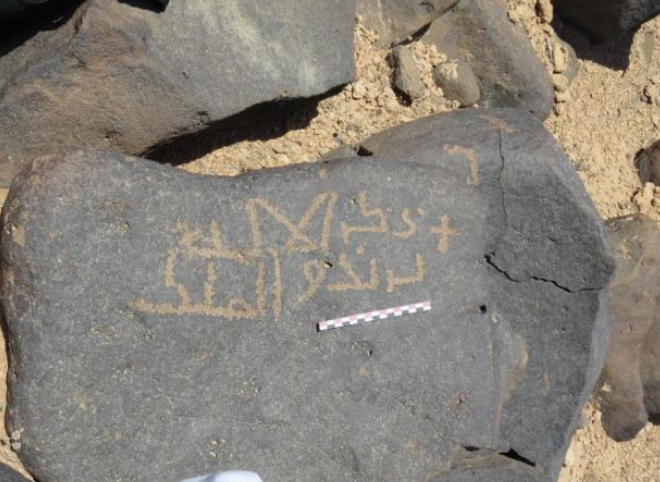
Fig. 2: Inscription from al-Mafraq (Jordan)
The name allâh appears frequently in the names used by Arab Christians, as was also the case among polytheists<. An example is this inscription found in southern Arabia: “Thawbân son of Marthad al-‘ilâh.” Additionally, a list of the names of Najrân’s Christians (Yemen), victims of the massacre of 523, has been preserved in the Book of the Himyarites, which contains fragmentary records of 174 victims. Robin considers the information in this book very reliable because its author (anonymous), “a contemporary of the events, conducted a real investigation among the participants and witnesses”30. Among this list, the name ‘Abdallâh appears 10 times. It is the most frequent name after ‘Amr (9 instances) and Muʿâwiya (7). It is not possible to generalize these data to all Arab Christians, but the sample is large enough to affirm that ‘Abdallâh was a very popular name among the Christian community at Najrân during the 6th century31.
An epigraphic and documentary review shows that Arab Christians called their god al-‘ilâh. Leila Nahmé notes that this name “is the normal Arabic designation for God among pre-Islamic Christians”32. This name is probably a calque of the Syriac ‘Alâhâ33. In most Christian inscriptions, al-‘ilâh is rarely written as allâh. The preservation of the form al-‘ilâh raises the question: Nicolai Sinai suggests that Christians used this form to distinguish themselves from polytheists whose deity was named Allâh, as previously mentioned. Another hypothesis is that the form al-‘ilâh maintains the same two-part structure as the Greek ho theos. Regardless, it is undeniable that even among these Christians, al-‘ilâh and allâh were interchangeable names34.
Finally, it is worth noting that the Himyarite Christians followed the practice of their Jewish compatriots in calling their god “Rahmânân.” Among Christians, this name particularly designates God the Father, alongside Jesus and the Holy Spirit. It is mentioned in an inscription from the first Christian sovereign of the kingdom, Sumûyafa’ Ashwa’: “In the name of Rahmânân, of His son Christ the Victor, and of the Holy Spirit.” His successor, Abraha, of Ethiopian origin, did the same, as shown by the following inscriptions: “With the power of Rahmânân and His Messiah,” “With the power, aid, and mercy of Rahmânân, His Messiah, and the Holy Spirit”35. The use of “Rahmânân” instead of “Father” in the Trinity is somewhat surprising. It is probably an attempt by the new Christian rulers to find a compromise with the Jews, who made up a large part of the population36. It is noteworthy that Abraha, unlike his predecessor, carefully avoids mentioning the “Son,” but simply refers to the “Messiah.” Robin notes that “Abraha’s Christology can thus be considered as a search for a middle ground to unite Jews and Christians into one community”37.