Context
The Quran mentions an enigmatic figure called Luqman, who gave his name to Surah 31. The identity of Luqman has divided Muslim commentators, who have proposed numerous hypotheses that contradict each other. According to exegists, Luqman could indeed be (choice of):- An pre-Islamic Arab prophet;
- An Ethiopian slave;
- An Egyptian slave;
- The nephew of the prophet Job;
- A judge of the Israelites' people.
In short, as is often the case, there is great confusion among Muslim exegists. This shows, incidentally, that they were facing a text they simply did not understand, which forced them to make all sorts of reckless and mutually incompatible hypotheses (Luqman's example is a textbook case). However, historical-critical research allows us to see more clearly the identity of Luqman.
A Greek philosopher
First, it is clearly established that the name Luqman is derived from the name of the Pythagorean physician and philosopher Alcmaeon of Croton (d. ~450 BC). Mahmud Muftic notes that he was also known under the names Alcimon, Alcmon, or Locmon2. But beyond the similarity of the names (Locman/Luqman), very close formulas are also found on both sides. In a fragment preserved by the poet Diogenes Laërtius, Alcmaeon addresses his student beginning his speech with the phrase: “O my son.” Now, in the Quran, Luqman uses exactly the same phrase: “Luqman said to his son, admonishing him: ‘O my son! Do not associate anything with God. Polytheism is an injustice’” (31:13). Muftic also points out that Alcmaeon would have professed the oneness of God, which aligns well with Luqman's teachings3. However, this statement is inaccurate because Alcmaeon was a polytheist, as shown in his writings through the use of the plural to refer to “the gods”4. What is true, however, is that Alcmaeon’s polytheism was “erased” by some ancient Christian authors such as Clement of Alexandria, who portrayed the Greek philosopher as a sort of monotheist ahead of his time. As historian Juan Cole points out, “it is possible that a tradition developed at the end of antiquity attributing to him wise sayings, [...] and presenting him as having monotheistic tendencies”5. In this case, the Luqman of the Quran does not refer to the historical Alcmaeon, but rather to a mythical and “Christianized” version of the famous philosopher.
Luqman and the wise Ahiqar
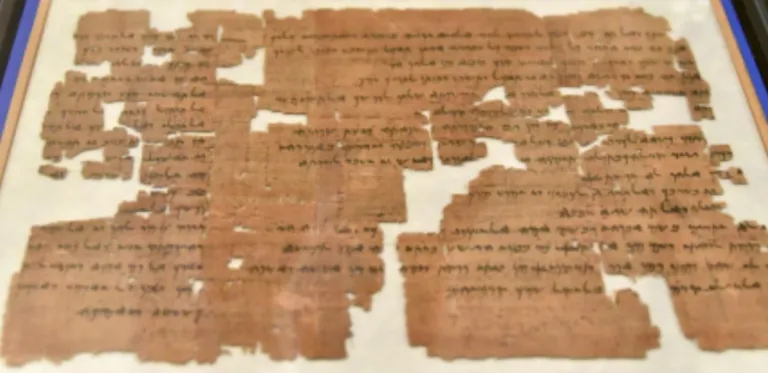
Another figure that the Quran has conflated with Luqman is none other than the Mesopotamian sage Ahiqar. It is said he lived in Iraq in the 5th century BCE and served as a scribe at the royal court6. He is notably known thanks to a text called The Wisdom of Ahiqar, written in Aramaic around the same period7. The text is presented as “a list of maxims in the pure tradition of ancient Eastern wisdom”8, explains Françoise Briquel Chatonnet. Subsequently, it gained great success throughout the Near East and was the subject of many translations and adaptations. Interestingly, in a later Syriac version, the sage Ahiqar appears as a monotheist9.