Introduction
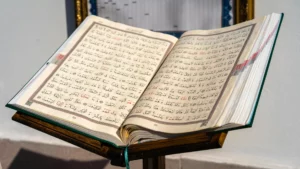
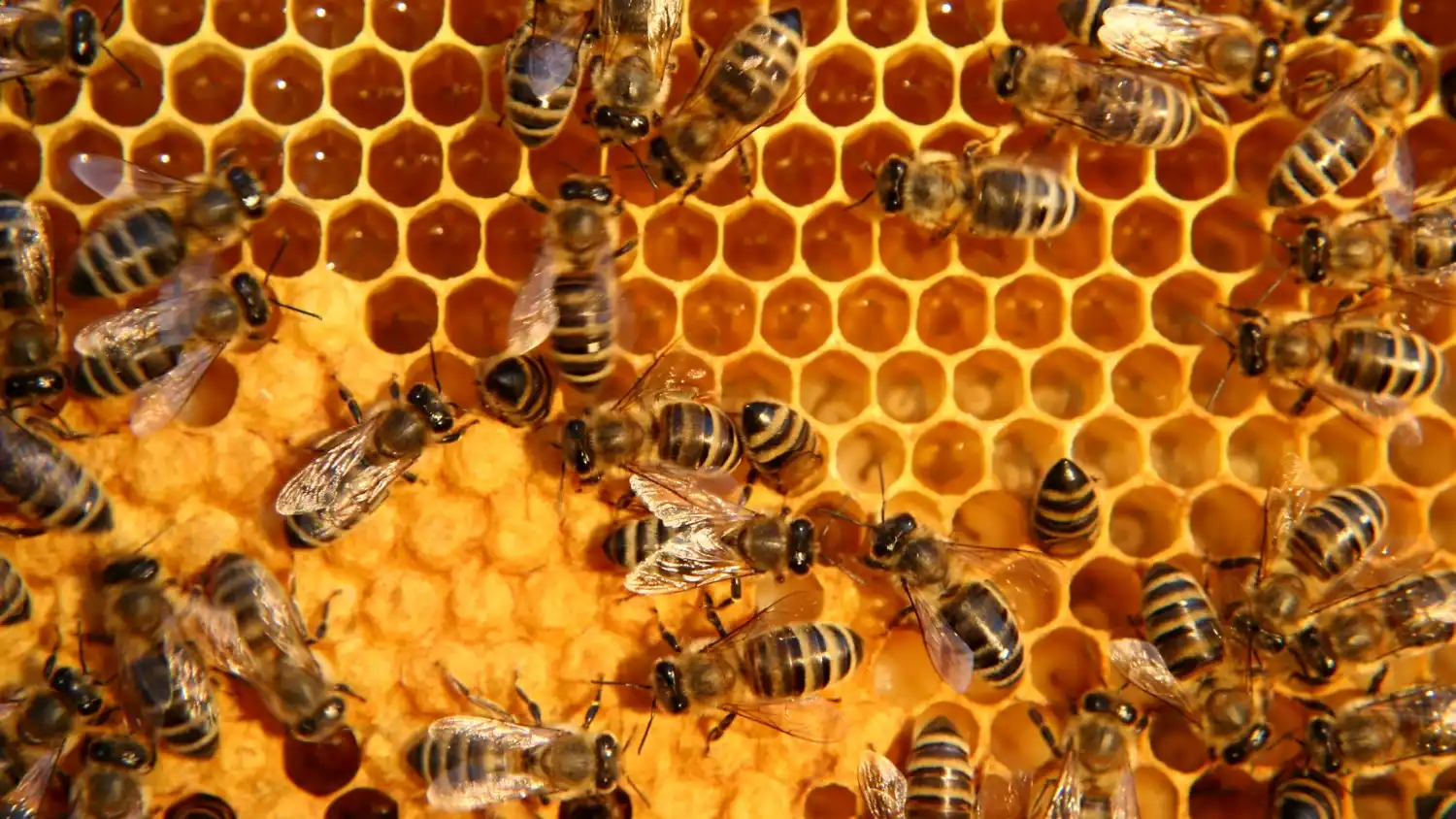
With ants and spiders, bees are the only invertebrates mentioned in the Quran and even give their name to Surah 16. We read there: [And indeed] your Lord revealed to the bees: "Take dwellings in the mountains, trees, and trellises that [humans] make. Then eat from all kinds of fruits, and follow the ways of your Lord made easy for you." From their bellies comes a drink, of various colors, in which there is a healing for people. Indeed, there is a sign for people who reflect (16:68-69). In this passage, bees are designated as a divine “sign” (ayât) because of the benefit they provide to humans. Even more interestingly, the Quran states that Allah revealed a message to the bees. Thus, they appear as Allah’s privileged interlocutors and even as His Messengers. This discourse on the role of bees as vessels of divine speech is, however, not unique to the Quran. We will see that it draws inspiration from mythic conceptions developed by Greek and Christian authors1.Bees in Greek mythology
Bees have been the subject of many writings by classical authors, who viewed them as divine beings. In Greek mythology, they are considered to possess a "prophetic power"2. At Delphi, the Pythia, the prophetess of the oracle of Apollo, was sometimes called "the Delphic bee." Bees are also a source of prophetic and poetic inspiration3. It is told that poets and sages, such as Plato, Hesiod, and Virgil, were, in their childhood, nourished by bees. An additional myth reports that when Zeus was a child, his mother hid him in a cave in Crete. The young Zeus was nourished by bees, in return for which he gave them their special nature4. According to legend, it was a swarm of bees that guided the Athenians in the mythical land of Ionia5. Generally, the bee becomes associated with divine inspiration and prophetic gifts. Arthur Cook explains that these attributes come from the observation that bees seem to predict bad weather6, as Aristotle notably observed: "Bees sense bad weather and rain. The indication is that when they do not leave the hive and do not fly far; but they circulate in the warm air, which it provides for them. Farmers infer this as a sign that bad weather is coming" (History of Animals, IX, 46).
In the eyes of ancient authors, bees form the ideal society. For Aristotle, among animals, the bee is the most "political," with its social organization defined by a political hierarchy with a queen and her subjects. Moreover, the hive is perceived as a microcosm of human society. In this regard, bees teach humans to work, build, and preserve food7. Thus, Greek and Latin authors describe bees as a divine sign, as they would later in the Quran8. The poet Virgil dedicates an entire chapter of his Georgics to them, where he notably writes: "From these signs and following these examples, it is said that bees possess a fragment of divine intelligence" (4, 219-221). Moreover, the benefits that can be derived from bees, such as honey or wax, are well known to ancient authors (e.g., Pliny, Natural History, XXII, 50). The Quran, which also extols their virtues, fits into a very ancient tradition.
Christian sources
Following the Greeks, the theme of the bee as a “divine sign” was developed by Christian authors. In his Life of Ambrose, Pauline of Milan (d. 429) describes the bee as "a heavenly gift" (coelestia dona). But Christians went further than their predecessors. Indeed, the bee is no longer just gifted with prophecy; it transmits the word of God, collected in the celestial dew. In one of his homilies, Bishop Jacob of Saroug (d. 521), a well-known Syriac author, also praises the benefits of the bee, to which God has revealed His knowledge. He writes: It is for you that the Creator endowed the bee with a fabulous spirit, so that it may gather for you a sweet fragrance. He transmitted knowledge to it, filled it with expertise, and made it flow in abundance. [...] The bee gathers roots, flowers, and herbs and, thanks to its craftsmanship, obtains a marvelous product. From the sting of the bee, He [= God, ed.] provided you with honey9.As can be seen, Jacob's homily shares strong affinities with the Quranic passage. In particular, both texts emphasize that God instructed the bees, allowing them to produce honey, which is presented in both texts as a proof of divine mercy.
It therefore clearly appears that Greek and then Christian thought prepared the ground for the Quranic idea that God revealed a message to the bees. In a detailed study on the subject, Andrew Faster and Kathryn Kueny write that: the fact that an insect received a revelation only makes sense when viewed in the light of classical and non-biblical Christian precedents, where bees commonly and frequently serve as transmitters of signs or divine revelations, and [where] honey is linked to divine knowledge or wisdom10. The two authors also draw attention to the fact that the verse about bees is preceded by a verse mentioning the milk of cattle (16:66), and another verse referring to the "intoxicating drink" drawn from palms and vines (16:67). By metonymy11, the Quran thus exalts these three liquids (milk, wine, and honey) as divine signs. Particularly interesting is the metonymic association between the cow and the bee. In antiquity, it was widely believed that bees spontaneously generated from cow carcasses. Virgil, for example, writes that “if the species should disappear, the beekeeper would resort to the method used by Aristaeus; he would leave to rot the carcass of a calf, from which a new swarm would emerge” (Georgics, IV, 281–314). The Quran seems to echo this belief, by evoking the theme of the reanimation of the earth after its death (16:65). Thus, the bee “serves as a symbol of incarnation, of life renewed after death”12.