Context
According to Islamic tradition, Muhammad is not only a prophet who brought the final "revelation" but also a military leader and conqueror. Accounts of his battles, raids, and scorched-earth tactics number in the dozens, and Muslim theologians praise both his prophetic virtues and his combat skills. The martial aspect of the Prophet is even exemplified in Muslim literature, which describes his military operations, tactics, weapons, and more in detail. This introductory article aims to provide a comprehensive overview of the Prophet’s battles and to answer the main questions: for what reasons did Muhammad undertake so many operations? Are these historic events?An armed prophet
The accounts of prophetic battles
According to Islamic sources, Muhammad’s prophetic career took place in two phases: (1) the Meccan period (610–622), during which he and his early companions formed a marginalized and vulnerable community, subjected to humiliations of all kinds by the Quraysh; (2) the Medinan period (622–632), which saw the nascent community grow stronger through alliances and pacts. The Prophet then became a military commander and initiated a number of military operations to expand his political power and gather material resources.
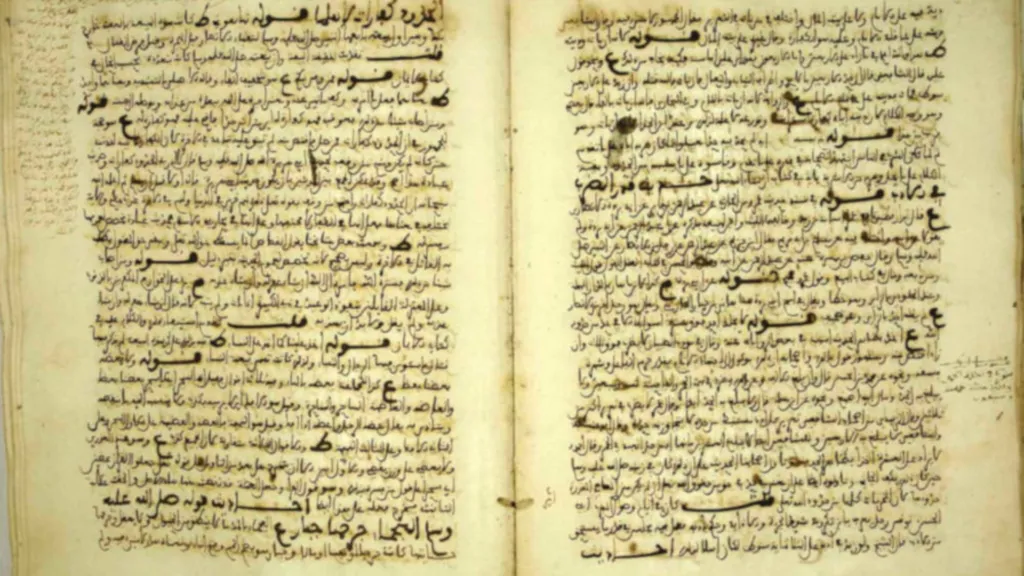
Accounts of these military expeditions are documented in specialized works called maghâzî. The first such work, or at least the earliest to have survived, is that of historian al-Waqidi (d. 823), written at the request of the caliph1. The traditions regarding the battles of the Prophet are, however, older and likely existed at least in oral form by the late 7th century2. Beyond maghâzî, accounts of battles also occupy a significant place in various biographies of the Prophet and in collections of hadith. Al Bukhari (d. 870) dedicates one of the densest chapters of his famous Sahih, as does the traditionist Muslim ibn al-Hajjâj (d. 875).
The question arises, as with all treatments of Islamic sources, regarding the historicity of the reports they contain. Are these based on actual historical events, or are they literary fictions? To answer this, each battle mentioned in the sources should be examined case by case to determine its degree of historicity. What is certain, however, is that Muhammad definitely conducted military operations to consolidate his political power and/or increase his economic resources. Some of his incursions into Palestine are even recorded in non-Islamic sources3. Furthermore, a written account from around 670
Conversely, Islamic sources likely have exaggerated or even fabricated these accounts of military operations. The image of a warrior-prophet begins to appear in sources toward the end of the 7th century6, within a context of territorial expansion of the Arab empire, which had much to gain by presenting Muhammad as a military leader to legitimize its own conquests and encourage believers to follow the “model” of the prophet. The martial dimension of Muhammad then intensified throughout the 8th and 9th centuries. Some newly reported feats of arms suddenly appear. Paradoxically, the further one moves from the time of the Prophet, the more detailed and precise the narratives about his battles become, which should naturally raise questions about their reliability7. To give an idea, the collection of hadith attributed to ‘Abd al-Razzaq, written in the 8th century, contains 91 narrations about Muhammad’s wars. A century later, al-Bukhari mentions 402 in his compilation8. Over this period, many narrations were invented, either to fill gaps within existing stories or to serve political, legal, or exegetic needs. Therefore, the stories about the Prophet’s battles should be read and analyzed with great caution, bearing in mind, as Ayman Ibrahim emphasizes, that “Arab sources aim to represent what their authors thought or wanted to convey rather than to report what actually happened during the early Islamic period”9.
The black legend of the Prophet
Regardless of the historicity of the transmitted information, it is undeniable that Islamic sources portray Muhammad as a warrior. Certainly, combining the roles of prophet and military leader is not new. After all, Moses is sometimes described as a military commander in the Bible10. However, the frequency of wars led by Muhammad and their centrality within his community appear unrivaled in the religious context of Antiquity. So much so that an early “black legend” developed, depicting the prophet of Islam as a barbaric and violent man. In the 9th century, the Byzantine theologian Nicetas directly addressed Muhammad: “Moses, besides being a legislator, is also a prophet, and we see the effects of his prophecy daily; but what do we admire in you? Debaucheries? Massacres? Fires? Looting?”11. Later, Voltaire echoed this “black legend,” denouncing what he saw as Muhammad’s supposed intolerance: “Let him set his country on fire and blood to uphold this book; let him cut the throats of fathers and ravish daughters; let him give the defeated the choice between their religion and death; that is something no man could truly justify”12.
This image of the Prophet, with various pejorative qualifiers (“barbaric,” “bloodthirsty,” “warrior,” etc.), remains widespread today, especially among critics of Islam. The accusation is partly biased because it does not take into account the context of the time — in this regard, most ancient philosophers would also be considered “barbarians,” given their views on slavery. It is true, however, that a prophet is not a philosopher, and Muhammad is regarded by Muslims as a “excellent model,” intended to serve as a example across all places and eras.
Moreover, the image of a violent prophet is drawn from the sources transmitted by Muslim chroniclers themselves. It is therefore not entirely foreign to the reality presented in the sources, although the interpretation of these can naturally vary. What some consider heinous crimes, others may see as acts of legitimate defense, demonstration of power, or commands from Allah. Nevertheless, some acts are stubbornly indisputable regardless of interpretation. For instance, what can be said about the decapitation ordered by the Prophet of several hundred Jewish men in Medina (see below), which Tunisian thinker Hichem Djaït (d. 2021) even labeled as a “massacre”13?
The Prophet’s expeditions
Islamic historians classify battles into two categories. On one hand, those led personally by the Prophet: either a raid (ghazwa, which gave the French “razzia”), or a military campaign (maghza, pl. maghâzî). On the other hand, operations Muhammad did not partake in but authorized by appointing a leader. These are generally smaller-scale actions such as an incursion (sariyya), a commando operation (batha), or espionage missions (liwa).
Regarding the number of battles led by the Prophet, Islamic sources are often contradictory and fail to reach a consensus. Ibn Hisham (d. 833) counts twenty-seven such operations in his Sira Rasul Allah, while al-Asbahani (d. 979) mentions only twenty-one. Al-Bayhaqi (d. 1066) lists nineteen, aligning with al-Dhahabi’s Tarikh al-Islam, but he mentions as many as twenty-three expeditions just a few pages later! The chronology of Muhammad’s military campaigns also suffers from many discrepancies.
American historian John M. B. Jones examined an original manuscript from the British Museum containing a complete edition of al Waqidi’s Book of Expeditions. He compiled a chronological list of raids, expeditions, punitive actions, and assassinations. Unfortunately, this list does not exactly correspond with other sources. Nonetheless, it offers the best overall view of these activities as they appear in al Waqidi’s writings. Muhammad reportedly led or authorized 85 military operations over a span of 10 years, nearly one per month. Below is the list compiled by Jones14.
Chronological list of Muhammad’s military operations
1. Hamza’s raid on the coast2. Rabigh
3. Al-Kharrar
4. Al-Abwa
5. Buwat
6. Badr al Ula
7. Al Ushayra
8. Nakhla
9. Badr
10. Assassination of Asma bint Marwan
11. Assassination of Abû Afak
12. Expulsion of Banu Qaynuqa
13. Al-Sawiq
14. Qaraqat al-Kudr
15. Assassination of Ka’b al-Ashraf
16. Dhu Amarr
17. Buhran
18. Al-Qarada
19. Uhud
20. Hamra al-Asad
21. Qatan
22. Bir Mauna
23. Al-Raji
24. Expulsion of Banu Nadir
25. Badr al-Mawid
26. Assassination of Abu Rafi
27. Dhat al-Riqa
28. Dumat al-Jandal
29. Al-Muraysi I
30. Al-Muraysi II
31. Al-Khandak
32. Extermination of Banu Qurayza
33. Assassination of Sufyan ibn Khalid
34. Al-Qurta
35. Banu Lihyan I
36. Banu Lihyan II
37. Al-Ghaba
38. Al-Ghamr
39. Dhul Qassa I
40. Dhul Qassa II
41. Banu Sulaym
42. Al-Is
43. Al-Taraf
44. Hisma
45. Wadil Qura
46. Dumat al-Jandal
47. Fadak
48. Assassination of Umm Qirfa
49. Assassination of Usayr ibn Razim
50. Banu Urayna
51. Al-Hudaybiyya
52. Khaybar
53. Turba
54. Najd
55. Fadak
56. Al-Mayfa
57. Al-Jinab
58. Umrat al-Qadiya
59. Banu Sulaym
60. Al-Kadid
61. Dhat Atlah
62. Al-Sij
63. Muta
64. Dhat ak-Salasil
65. Al-Khabat I
66. Al-Khabat II
67. Al-Kadhira
68. Idam
69. Conquest of Mecca
70. Banu Jadhima
71. Hunayn
72. Al-Ta’if
73. Al-Jirana
74. Banu Tamim
75. Khatam
76. Al-Qurta
77. Raid against the Abyssinians
78. Destruction of the sanctuary of al-Fals
79. Tabuk
80. Dumat al-Jandal II
81. Hajj of Abu Nakhra
82. Najran
83. Ali in Yemen
84. Hajj al-Wada
85. Usama ibn Zayd in Syria
Were most battles defensive?
What reasons motivated Muhammad to undertake so many military operations in such a short time? The most common explanation among contemporary Muslim authors is that Muhammad’s operations were defensive or aimed at thwarting potential attacks from opposing forces. This is what preacher Tariq Ramadan supports, stating in his biography of the Prophet that “from now on, it was no longer about passive resistance, but about defending oneself against enemy aggression,” emphasizing “the necessary resistance with arms, legitimate defense, against the oppressor”15. This kind of discourse clearly has an apologetic agenda, aiming to present Muhammad’s military actions in a light compatible with modern societal norms. However, it does not withstand scrutiny of the sources. Pre-modern Muslim authors, who did not shy away from caution, viewed the battles of the Prophet quite differently. For them, these battles were commands from Allah, and their purpose was to propagate the Islamic faith among unbelievers through holy war (jihad)16. This perspective is notably supported by the famous “verse of the sword” (9:5), which is said to abrogate earlier verses more favorable to non-Muslims. There is also the prophetic tradition that leaves no room for ambiguity: > “I have been ordered to fight people until they say: ‘There is no god but Allah and Muhammad is the Messenger of Allah,’ and they establish prayer and pay zakat. If they do so, then they will have saved their lives and their properties from me”17. This hadith undermines the hypothesis that Muhammad’s wars were purely defensive. In fact, the sources themselves contradict this view. As Ibrahim’s analysis reveals, “it seems evident that most expeditions were not defensive”18. Ibrahim identifies four main objectives behind Muhammad’s wars: (1) extending Muslim political dominance by terrorizing the Quraysh enemies; (2) enriching the Muslim community through resources seized during raids; (3) training and preparing Muslims for larger incursions aimed at expanding their domain across Arabia; (4) politically and economically weakening the Quraysh19. In short, the motivations were neither purely defensive nor solely aimed at converting unbelievers to Islam. Muhammad’s motivations were mainly political and materialistic. An illustration of this is the famous Battle of Badr, which supposedly took place shortly after the migration to Medina. Muhammad, informed of a caravan passing by Quraysh enemies, decided to organize a raid. When Abu Sufyan, who led the caravan, learned of this, he changed course and did everything to avoid confrontation20..Ibn Hisham recounts that Muhammad’s men were initially hesitant to engage in battle because they “thought that the messenger of Allah would not initiate war”21. To motivate his troops, Muhammad then promised them a share of the spoils, which proved effective22. The offensive character of this battle, which seemed to surprise even Muhammad’s men, is therefore very clear in this example.
The art of war
Cunning has long been recognized as a vital aspect of war. Muhammad understood this well, as evidenced by a hadith recorded by al-Bukhari: “War is deception”23. Muslim sources report that Muhammad employed all sorts of stratagems to gain the upper hand, such as surprise attacks. The tribe of Banu Mustaliq suffered from this, according to another hadith: “The Prophet attacked Banu Mustaliq while they were unaware and watering their cattle. Their fighters were killed, and their women and children were taken captive”24. To surprise the enemy, Muhammad favored night attacks and did not shy away from killing innocent women and children during these operations25. Another strategy Muhammad used involved terrorizing his enemies. It even became one of the signs of his prophetic mission, according to a hadith preserved by al-Bukhari: > “I have been distinguished among the prophets by six favors: I was granted speech that is exhaustive yet brief. I triumph through terror. The booty has been made lawful for me. The entire earth has been made a place of purification and prayer for me. I was sent to all mankind. And finally, I am the last of the prophets”26. Another tradition attributes to Muhammad the words: “I was sent to strike necks and to shackle prisoners tightly”27. Moreover, many accounts from Islamic sources depict Muhammad and his followers seeking deliberately to induce terror among their opponents. The jurist Abû Ya‘lâ reported a tradition where Muhammad states to members of his tribe: “O people of Qoraych! By Him who holds my soul in His hand! I have come to you only with slaughter!” with a gesture of the hand across his throat28. Assassinations were also ordered against men and women who mocked him or the Qur'an. Examples include poet decapitations and the brutal punishment of Umm Qirfa, who was torn apart for criticizing Muhammad29. The most emblematic scene of terror, however, is the fate imposed on Banu Qurayza. Muhammad ordered the beheading of all male adults of this Jewish tribe in Medina, then threw their corpses into a pit and enslaved the women and non-pubertal boys. The total execution is estimated at 600 to 900 men, with about a thousand slaves in total30. This event clearly fits within the terror strategy implemented by Muhammad, according to Islamic sources.The weapons of the Prophet
Like all good soldiers, Muhammad had his favorite weapons, with subsequent works providing details. Muslim authors have compiled numerous lists of weapons attributed to the Prophet, and some even dedicated entire chapters to this subject. In his prophetic biography, al-Dhahabi (d. 1348) dedicated a section titled “the weapons of Muhammad the Prophet, his armor, and other war equipment.” Ibn Sa’d’s (d. 845) encyclopedia also contains several entries about his armor, lances, shields, and more.The bows
Muslim sources state that Muhammad possessed a collection of bows. This weapon, used for long-range combat, was already known among Arabs in antiquity, as evidenced by contemporary inscriptions31.Ibn Sa’d reports in his Tabqat that the Prophet had three bows, taken as spoils from Banu Qaynuqa: > “The envoy of Allah took among the weapons of Banu Qaynuqa three spears and three bows. One of the bows was called al Rawha, another, made of shawat wood, was called al Bayda, and the yellow bow was called al Safra because it was made of nada wood”32.
In the hadiths, the bow is frequently mentioned and highly praised by Muhammad, who attributes its use to Ishmael, the mythic ancestor of the Arabs: “O descendants of Ishmael! Practice archery, for your father was a great archer”33. Additionally, An-Nasa’i includes in his Sunan the tradition: “Whoever shoots an arrow for the sake of Allah and hits the target, it will elevate him a level in Paradise”34. Another tradition recorded by Muslim states that Muhammad told his men: “Prepare yourselves to meet them with all the strength you have. Pay attention: strength is in the bows and arrows. Pay attention: strength is in the bows and arrows”35. This emphasis on “strength” and the merits of archery sharply contrasts with Greek views, which considered this weapon “the instrument of cowards”36.
According to Islamic sources, the bow was one of Muhammad’s most-used weapons and was regularly employed to eliminate opponents. Al-Tabari recounts a story where Muhammad assigned one of his companions, Amr bin Umayyah, to assassinate Abû Sufyan. On the way, the mercenary stopped in a cave and recounts a scene worthy of a horror film:
“I entered a cave with my bow and arrows. A one-eyed giant from the Banu al Dil Banu Bakr tribe entered later with his flock. He asked: ‘Who is there?’ and I replied: ‘Someone from Banu Bakr’s tribe.’ He said: ‘I am also from Banu Bakr, from al Dil.’ He lay down near me and started to sing:”
I will not be Muslim as long as I live,
and I will not believe in the faith of Muslims.
I then said: “We shall see!” The Bedouin fell asleep and started snoring. I moved towards him and killed him in the cruelest way ever, like no one has been killed. I lay on him, put the tip of my bow in his good eye, and pressed so hard that it went in to the base of the neck. Then I ran out like a wild beast, fleeing for my life37.
Swords and sabers
Among the extensive collection of Muhammad’s weapons, the saber occupies a prominent position. It is said that he possessed seven or more, according to various versions38. The first was inherited from his father, and he then bequeathed it to his son-in-law Ali. The others were stolen from his enemies. One of these swords, seized from a Jewish tribe, is nicknamed “the sword of prophets.” According to legend, it originally belonged to David, used in his fight against Goliath, and was passed down among the prophets who succeeded him until Jesus39. Throughout Islamic history, the sword has played an important role not only in the sacred fight (jihad) but also in collective imagination. It is the ultimate weapon of the Muslim warrior and the entry to Paradise according to a famous hadith where Muhammad states that “Paradise lies at the shadow of swords”40. Several swords thought to belong to the Prophet can be seen at the Topkapi Palace Museum in Istanbul (see Fig. 1 below). The use of the conditional here is very important because, without a thorough study of these so-called relics, it is impossible to establish their authenticity. From what we know, it is very likely they are forgeries. Two historians have accessed the museum collection but were not authorized to conduct detailed examinations. Here is what has been concluded:
> “The group of swords and sabers currently stored in the Prophet’s Treasury at the Topkapi Museum has never been critically and thoroughly studied, and that remains true for this occasion. As the objects are considered sacred, we were unable to handle them for our work. Nonetheless, even an approximate analysis suggests that, except for items attributed to the last Abbasid caliph, none of the pieces in this group withstand typological and epigraphic analysis to be definitively dated to the period to which they are attributed, although some are very old and among the oldest known to date”41.